Sunday, 7 June 2015

The failed flower colouring

To change the colour of a flowers petals I got some food colouring and some white roses.
 
 
I added a generous amount of black food colouring to some water and popped the flower in.

 
In the previous video which demonstrated this experiment, it took about an hour and a half so my expectations were high...

 
In retrospect 2 minutes might have been a bit too soon to expect results. after half an hour nothing had changed and I was a little disappointed.
An hour later and these were still no changes so I decided to leave it over night.
 
In the morning my dreams were dashed. there was absolutely no change to the flower which had been sitting in food colouring for over 7 hours.
 
This result may be due to the type of flower I used, roses have very tight stems. If I chose to do this experiment again I would have to choose a different flower with a larger stem to allow the food colouring to be absorbed. I'm extremely disappointed that I wasn't able to change the colour of a flowers petal without using photoshop. But at least that doesn't take all night.

Friday, 5 June 2015

Ideas for colour changing

Because I've now found a way to change the colour of a flower without using paint, I plan to experiment with how the different colours of flowers effect their overall appearance and feelings towards them.
I also want to experiment with the different colours and effects I can make with the food colouring.

The reasoning behind this is to experiment with how nature can be changed and adapted through chemical changes. It also comes from how I have recently been looking at how flowers adapt when decomposing and dying.

Colour changing


cut-up collage

I wanted to create a collage including displacement and disorientation of flowers.

I wanted to add elements


Anya Gallaccio

I found Anya Gallaccio after getting the idea of looking how flowers decomposed after a week. Gallaccio is a British Artist, who often works with organic matter. She uses fruit, vegetables and flowers in her work and they often undergo a change during the course of being exhibited.


In Red on Green (1992), ten thousand rose heads placed on a bed of their stalks gradually withered as the exhibition went on.


I found how her exhibitions change over time interesting as they will change from day to day. Her works start as bright and vibrant pieces and change into dead and shrivelled components.


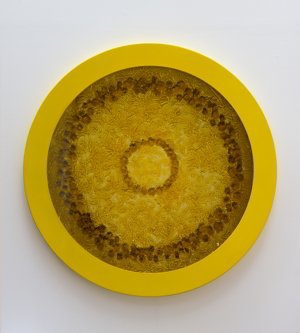
'Preserve 'beauty'' before
'Preserve 'beauty'' after
The type of flower used in the installation is a hybrid between a gerbera and a daisy that is known by the name ‘beauty’. I like the double meaning in the title as it can be interpreted to be meant as to preserve the flower itself or can be thought to represent the ideals of conventional beauty.

Thursday, 4 June 2015

Disintegrating flowers

Using the photos from my presentation, i decided instead of just throwing them away i would see how they dissintergrated over a week. 


I recognised that flowers, much like humans, get smaller and much more brittle over time. Their petals become much more delicate and soft. 

Helen Chadwick: 'Wreaths to Pleasure'

Each image captures a sculptural composition formed of a heady mix of substances and materials, photographed from above. Delicate flowers are suspended in transient states, poised between life and death, in a variety of organic and toxic liquids ranging from tomato juice to Windolene.


Chadwick often referred to the 'Wreaths' as 'bad blooms', explosions of form and colour that are simultaneously seductive and repellent.